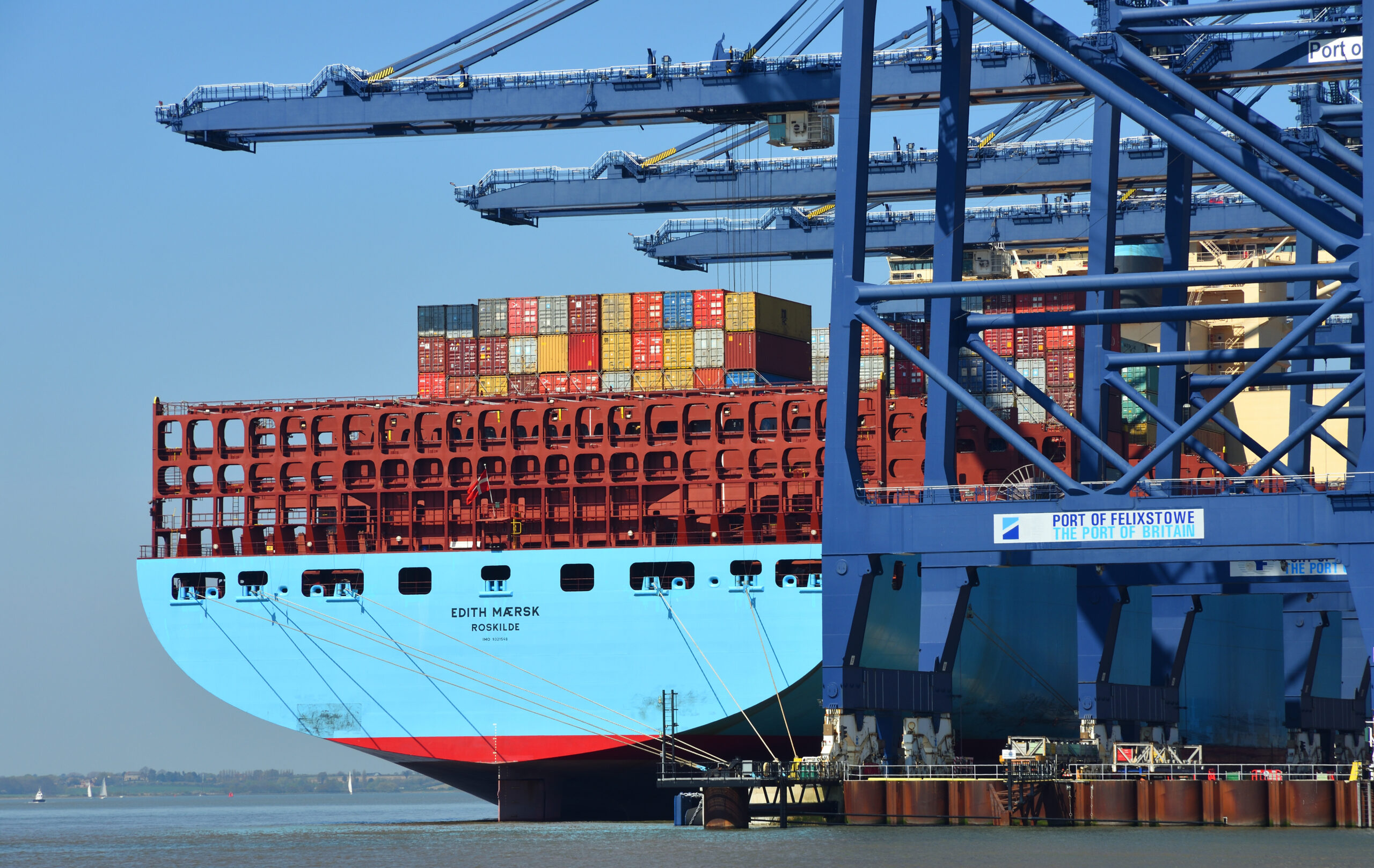


Samsung Heavy Industries (SHI) has completed a twelve-month demonstration of an onboard carbon capture and storage (OCCS) system on a 2,200 TEU container vessel operated by HMM. The project’s success provides a clear indication of the technical viability and commercial potential of OCCS technologies.
The OCCS system, developed by marine equipment manufacturer Panasia in collaboration with classification society Korean Register (KR), was retrofitted in 2024 on the HMM Mongla, a 25,000-dwt feeder vessel operating a loop between China, Bangladesh, Malaysia and Singapore. The OCCS unit is based on amine absorption technology and utilises waste heat generated during engine operation to capture carbon dioxide, thereby reducing additional energy requirements.
Samsung Heavy Industries conducted monthly performance assessments throughout the year. During tests in January and May 2025, the system produced liquefied CO2 with a purity exceeding 99.9%. The captured carbon was subsequently utilised in the production of green methanol, a low-emission fuel with potential applications in maritime propulsion.
SHI described the result as ‘a meaningful case of carbon resource utilisation’ and emphasised the trial’s role in demonstrating the integration of shipbuilding, shipping operations and alternative fuel production within the value chain.
Lee Dong-yeon, Executive Vice President and Director of the Ship and Offshore Research Institute at SHI, said: ‘OCCS will play an important role in the net-zero of ships in the future as it is used as an energy source to produce eco-friendly fuel. We will work to ensure that the shipbuilding, shipping, and equipment industries can take the lead in the OCCS market through collaboration.’
Panasia led the initial feasibility assessments, economic analysis and risk evaluations, and while also contributing engineering support for the system’s installation. The success of the retrofit evidences the potential role of OCCS in extending the operational lifespan of existing tonnage under the IMO’s global emissions pricing mechanism, set for formal ratification in October.
Despite the promising technical results, the absence of supporting infrastructure and regulatory frameworks have been cited as major barriers to commercial deployment. The establishment of onshore facilities for the handling and processing of captured CO2, as well as the development of applicable legal instruments, is regarded as essential for the widespread adoption of OCCS technologies.