

Maersk Tankers’ ammonia-carrier expansion and a new EU-backed retrofit project and CMB.TECH’s landmark bunkering operation in China point to growing maritime ambition. However, Woodside’s decision to scale back investment in US ammonia production exposes the gap between shipowners preparing to use the fuel and customers willing to pay for it.
It has been a revealing week for ammonia. On one side, shipping is taking tangible steps towards making the fuel part of its future: Maersk Tankers has secured selection for EU Innovation Fund support for an ammonia-engine retrofit project, while CMB.TECH’s Mineral Europa has bunkered 1,000 tonnes of green ammonia in China. On the other, Australian energy producer, Woodside, is reducing its investment in a US ammonia project after concluding that customer demand is developing more slowly than expected.
These developments are not necessarily contradictory, but what they show is the central challenge facing ammonia as a marine fuel. Shipping has begun to invest in the vessels and technology, but the wider fuel market is not yet ready to support them at scale.
Ships are getting ready. Will the market follow?
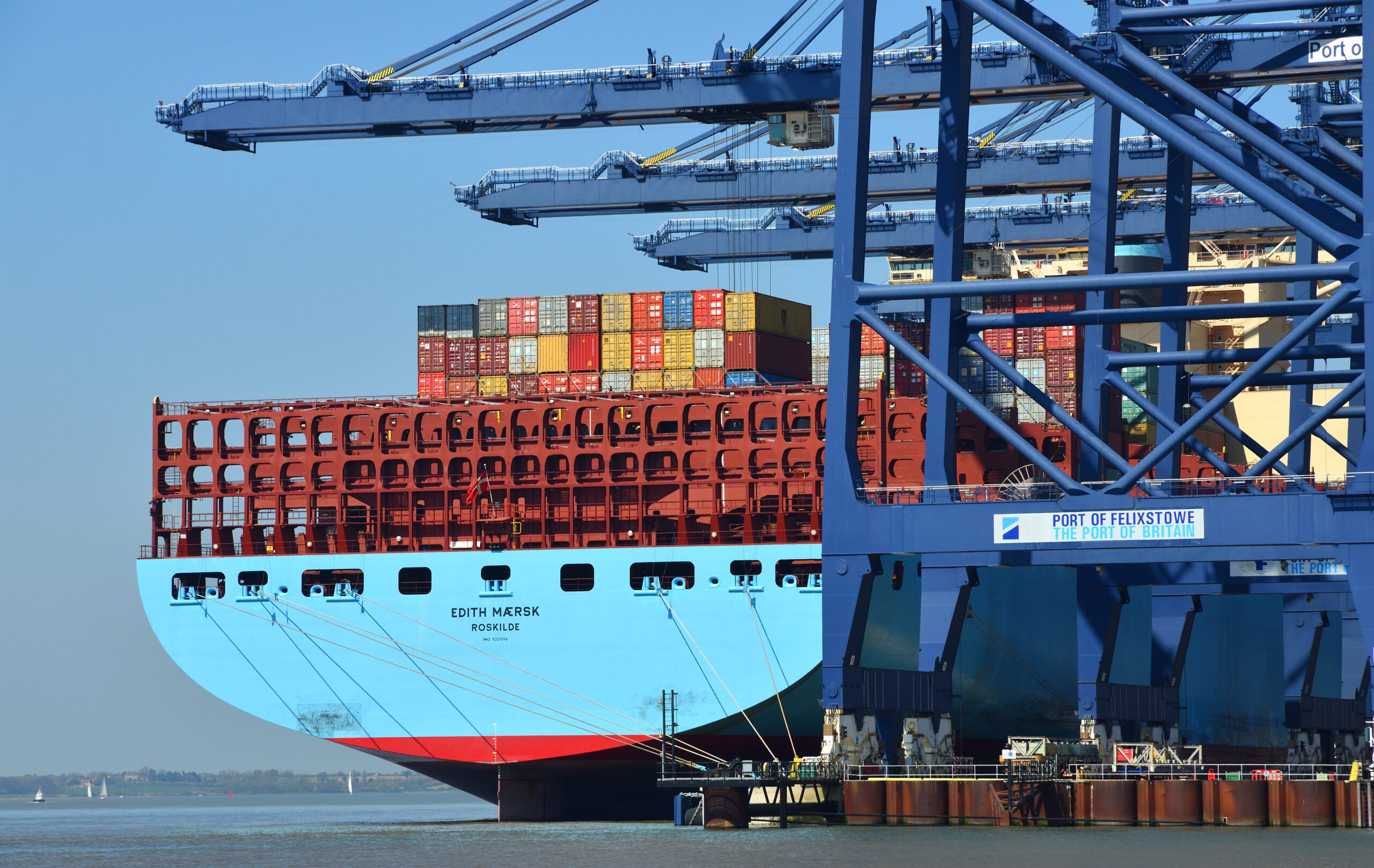
Maersk Tankers’ new fleet of ten Very Large Ammonia Carriers (VLACs) illustrates the opportunity. The ships are designed to carry ammonia and liquefied petroleum gas, with the potential to operate on ammonia as fuel. The second vessel in the series, Jessie Maersk, was named this week, as the company advances its ambition to use the cargo it transports as a fuel source.
The proposed EU RIPPLE project would retrofit four VLACs with dual-fuel engines capable of running on ammonia. Its selection for EU Innovation Fund support is an important step, although the grant agreement still needs to be finalised. More significantly, Maersk Tankers says proceeding with the retrofits will depend on securing commercial commitments from customers.
While funding support can help make an investment possible, it does not guarantee that customers will pay the premium associated with ammonia-fuelled transport. The commercial case depends on the availability and price of suitable fuel, the cost of converting the ships, the value customers place on lower-emission transport and the regulatory framework governing those emissions.
The VLAC model has an obvious attraction: a vessel carrying ammonia as cargo could, in principle, help create demand for ammonia as fuel. But the two markets are not interchangeable. The fact that ammonia is already traded at scale for industrial uses, and in future for power generation, does not automatically make it available at the right price, quality or carbon intensity for marine propulsion.
China provides a glimpse of the supply chain in action
CMB.TECH’s Mineral Europa offers a different kind of milestone. The 210,000-dwt bulk carrier bunkered 1,000 tonnes of green ammonia in Zhoushan, China, before setting out on its maiden voyage to Australia. The operation demonstrates that the supply chain can move beyond plans and trials to a substantial ship-to-ship fuel transfer from a dedicated ammonia bunkering barge, indicating that, in Zhoushan at least, the ammonia supply eco-system is maturing.
CMB.TECH plans to have 21 ammonia-powered vessels in its fleet by 2029, including 18 bulk carriers, a container ship and two chemical tankers. It has also moved to secure green-ammonia supply in China, including an offtake agreement with CEEC Hydrogen Energy. These commitments show that the company is developing its fuel supply chain alongside the fleet, rather than waiting for a mature market to emerge.
The next tests, for CBM.TECH and the wider industry, will include establishing supplies where and when they are needed, not just in one place, competitive pricing, safe operations and evidence that the vessels can deliver the expected emissions reductions in service.
Woodside’s retreat exposes the demand problem
Against the progress outlined above, Woodside’s decision to reduce its investment in the Beaumont New Ammonia plant in Texas is a reminder that production capacity does not create its own market.
Following a strategic review, Woodside said it would scale back its investment because customer demand had been slower than expected and the policy frameworks intended to support lower-carbon ammonia were shifting. The plant’s latest quarter was also affected by third-party feedstock constraints and a 30-day shutdown following a safety incident, meaning that it operated at 69% of capacity during the period.
The production constraints help explain the plant’s performance, but Woodside’s stated concern about demand points to a deeper challenge: even a functioning plant needs customers willing to commit to buying its output at a price that justifies the investment.
Woodside acquired Beaumont for $2.35 billion in 2024 as part of a broader lower-carbon growth strategy. Its decision to reduce its exposure is therefore a significant signal about the commercial uncertainty surrounding the sector. Although, this should not be read as evidence that all ammonia production projects face the same outlook. The economics vary according to production route, policy support, feedstock costs, offtake agreements and the markets being served.
For shipping, the implication is uncomfortable. Shipowners may be preparing vessels to use ammonia, but producers need sufficiently firm demand to justify investment in capacity. If customers delay commitments, production projects can be scaled back; if production fails to expand, fuel prices and availability may discourage shipowners from committing to ammonia propulsion. It may be an uncomfortable truth, but markets tend to evolve gradually in incremental stages, not undergo revolutions, especially in ones with capital requirements and project scales as large as these.
A market caught between ambition and bankability
Shipowners need confidence that fuel will be available at the ports and along the routes where their vessels operate and fuel producers need credible offtake commitments. Ports and bunkering providers need a sufficient volume of trade to justify investment in specialised infrastructure and finally charterers and cargo owners need to decide how much they are prepared to pay for the resulting emissions reductions.
Policy can influence each of these decisions, but it cannot substitute indefinitely for a viable business model. The EU Innovation Fund support for RIPPLE is an example of public money helping to bridge the gap between technical potential and deployment. The challenge is to use that support to unlock commercial commitments and repeatable projects, rather than simply to subsidise isolated demonstrations.
There is also a timing problem in that ships and production plants have long investment horizons, while carbon pricing, fuel standards and incentives can change. Woodside’s comments about shifting policy frameworks highlight the risks of committing billions of dollars to a market whose future demand depends partly on political decisions.
The crucial question for ammonia, or any other maritime fuel, is whether early adopters can establish sufficient dependable demand to give producers the confidence to invest, and whether the resulting fuel can be delivered at a price that customers will accept.
What to watch next
Three developments will help determine whether this week marks the beginning of a stronger commercial market or is simply a series of promising but disconnected milestones.
Firm customer commitments: Maersk Tankers has made clear that its proposed retrofits depend on commercial commitments. The nature and scale of those commitments will be a stronger signal than grant selection alone.
Repeatable fuel supply: Mineral Europa’s barge-to-ship operation is an important demonstration. The next question is whether green ammonia can be supplied reliably and competitively across the vessel’s trading pattern, and whether similar operations can be repeated at other ports.
Investment in production: Woodside’s decision makes clear that producers will respond to the demand they can substantiate. New capacity will require credible offtake, supportive policy and confidence in the long-term market.
The week’s developments do not show that ammonia is either succeeding or failing as a marine fuel. They show that the market is moving into a more consequential phase: ships are being built and prepared for ammonia, supply chains are beginning to operate, and producers are testing whether future demand, the regulatory environment and government policy justifies present investment. Progress doesn’t require full alignment of these factors, but meaningful progress does.