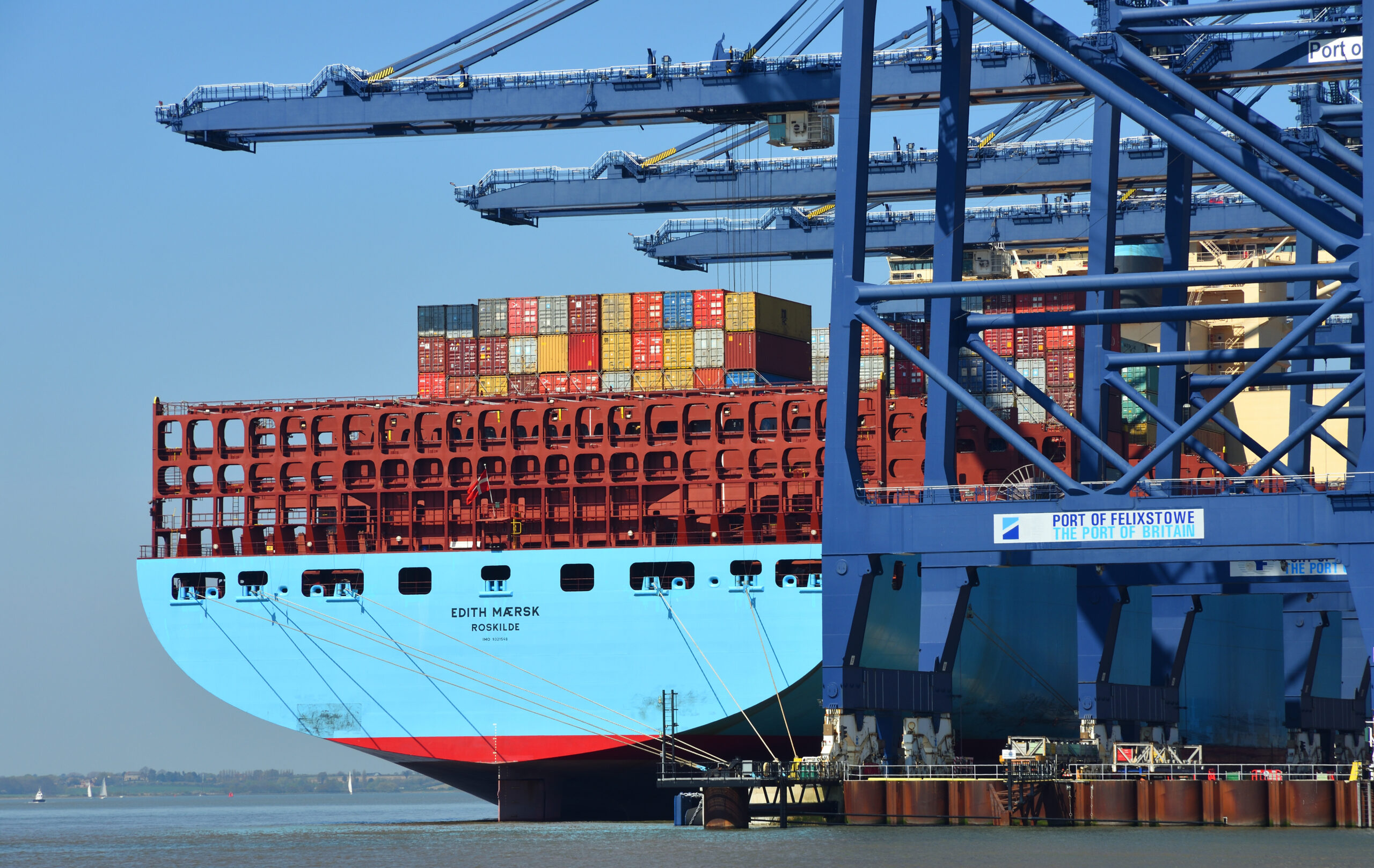


Accelleron used its event at London International Shipping Week to urge shipping leaders to view decarbonisation not as an isolated challenge but as part of the wider global hydrogen economy. In its new report, Deadlock: What’s Stopping Shipping’s Carbon-Neutral Fuel Transition?, the Swiss turbocharger manufacturer argues that shipping will only unlock the fuels it needs for net zero if it aggregates demand with other hard-to-abate sectors.
The report highlights that efficiency measures such as vessel retrofits and digital optimisation could cut emissions by more than 30% by 2030, surpassing the International Maritime Organization’s 2030 carbon reduction checkpoint. But these gains will only take the industry so far. To reach net zero by mid-century, shipping will require 100–150 million tonnes of green hydrogen each year, a level of demand far beyond today’s production capacity.
Globally, aviation, steel, cement, power and agriculture face similar constraints. Together, these sectors will need around 500 million tonnes of green hydrogen annually by 2050, supported by an estimated USD 9 trillion in cumulative investment. Current projects, however, add up to just 38 million tonnes of capacity, backed by less than USD 320 billion.
‘The ships are ready. The fuels are missing,’ the report states. Dual-fuel vessels, including those able to run on methanol and ammonia, now dominate orderbooks, yet the supply of scalable carbon-neutral fuels is virtually non-existent. Accelleron warns that shipping alone cannot create the offtake security required for mega hydrogen projects to reach final investment decision. The solution, it argues, lies in building cross-sector coalitions that transform fragmented competition into a critical mass of demand.
In the report’s foreword, Daniel Bischofberger, Accelleron CEO, wrote: ‘It is clear from our research and analysis, and from the contributions of the many stakeholders who were good enough to share their expertise and insights for this report, that reaching net zero is not only about fuels or systems, but about forging a new paradigm of partnership.’ He added: ‘Now, it is time to partner with other sectors to secure the fuels we all need to carry us, finally, to that net zero shore.’
The report also identifies five structural barriers, or ‘deadlocks’, constraining progress. These include uncertainty over fuel pathways, geographically concentrated supply hubs, a shortage of green finance, a mismatch between regulatory ambition and implementation timelines, and port infrastructure bottlenecks. Each, the report argues, cannot be resolved by shipping alone.
Biofuels, often promoted as a bridging option, are dismissed as a long-term solution. Shipping accounts for less than 1% of global biofuel supply, compared with 98.9% for road transport and 0.5% for aviation. The report instead positions green hydrogen and derived e-fuels as the only scalable route, underpinned by large-scale renewable power generation and carbon capture technologies.
Accelleron’s intervention is intended to galvanise action across both shipping and energy markets. The report considers shipping to be a potential driver of the global energy transition, leveraging its scale to accelerate investment in the hydrogen economy. The central message is that maritime decarbonisation will only succeed if pursued through cross-sector alliances, with ports serving as hubs to aggregate demand and channel capital at scale.