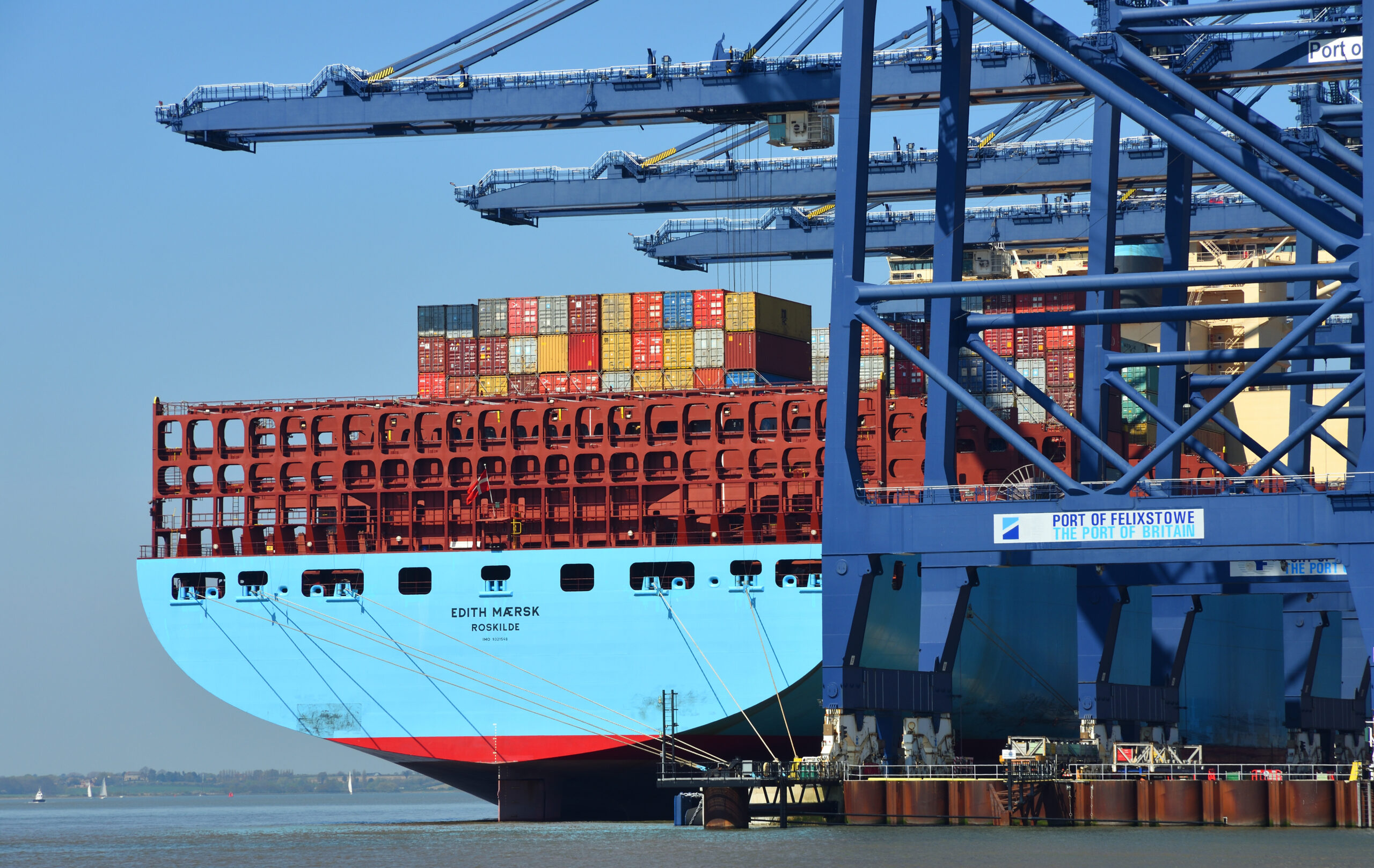


Capital Clean Energy Carriers has taken delivery of Active, the world’s first large-scale 22,000 cubic metre low-pressure LCO2 carrier. Built at Hyundai Mipo Dockyard, the vessel illustrates how shipping is preparing for the global scale-up of carbon capture, utilisation and storage (CCUS).
The vessel is the first of a series of four ordered by Capital Clean Energy Carriers as part of a strategy to create deployable tonnage for an emerging LCO2 trade while retaining commercial relevance in established gas markets. Unlike earlier CO2 carriers, which were built for specific projects, such as Norway’s Northern Lights, and were significantly smaller in scale, Active has been designed as a flexible, charter-ready asset capable of operating across multiple cargo segments.
The vessel uses a semi-refrigerated gas carrier system configured for low-pressure CO2 transport and can carry LCO2, LPG, ammonia and selected petrochemicals. This allows owners and charterers to switch between conventional gas trades and future carbon transport as infrastructure and regulation mature. For now, Active will begin life in a familiar market, entering service under a six-month time charter carrying LPG for an energy trading company, with an option to extend the contract by a further six months.
Gerasimos G. Kalogiratos, CEO of Capital Clean Energy Carriers, said: ‘The delivery of Active marks another important milestone in CCEC’s development. This unique LCO2/multi-gas vessel series strategically positions CCEC to support the emerging LCO2 transportation market, while offering the flexibility to trade across established gas segments.’
Prior to delivery, Active completed a two-week CO2 trial campaign using low-pressure technology at Hyundai Mipo Dockyard. More than 54 truckloads of domestically sourced CO2 were used to test the cargo tanks and cargo management systems. The design point is described as next-generation low-pressure technology operating at approximately 8.0 barg and -55°C, in line with what the company defines as its technical envelope. This configuration is intended to simplify containment and reduce overall system complexity compared with high-pressure alternatives.
According to data from the International Energy Agency’s CCUS project tracking, global CO2 capture capacity could rise from around 50 million tonnes per year today to approximately 430 million tonnes per year by 2030. Over the same period, storage capacity could increase to about 670 million tonnes per year. As industrial capture projects multiply and storage hubs develop, shipping will become an essential link between emitters and permanent storage sites.
Pipelines are likely to dominate short-distance transport where geography allows, but ships provide flexibility, speed of deployment and international reach. They also allow carbon capture to develop independently of fixed infrastructure, enabling early projects to move forward without waiting for large pipeline networks.