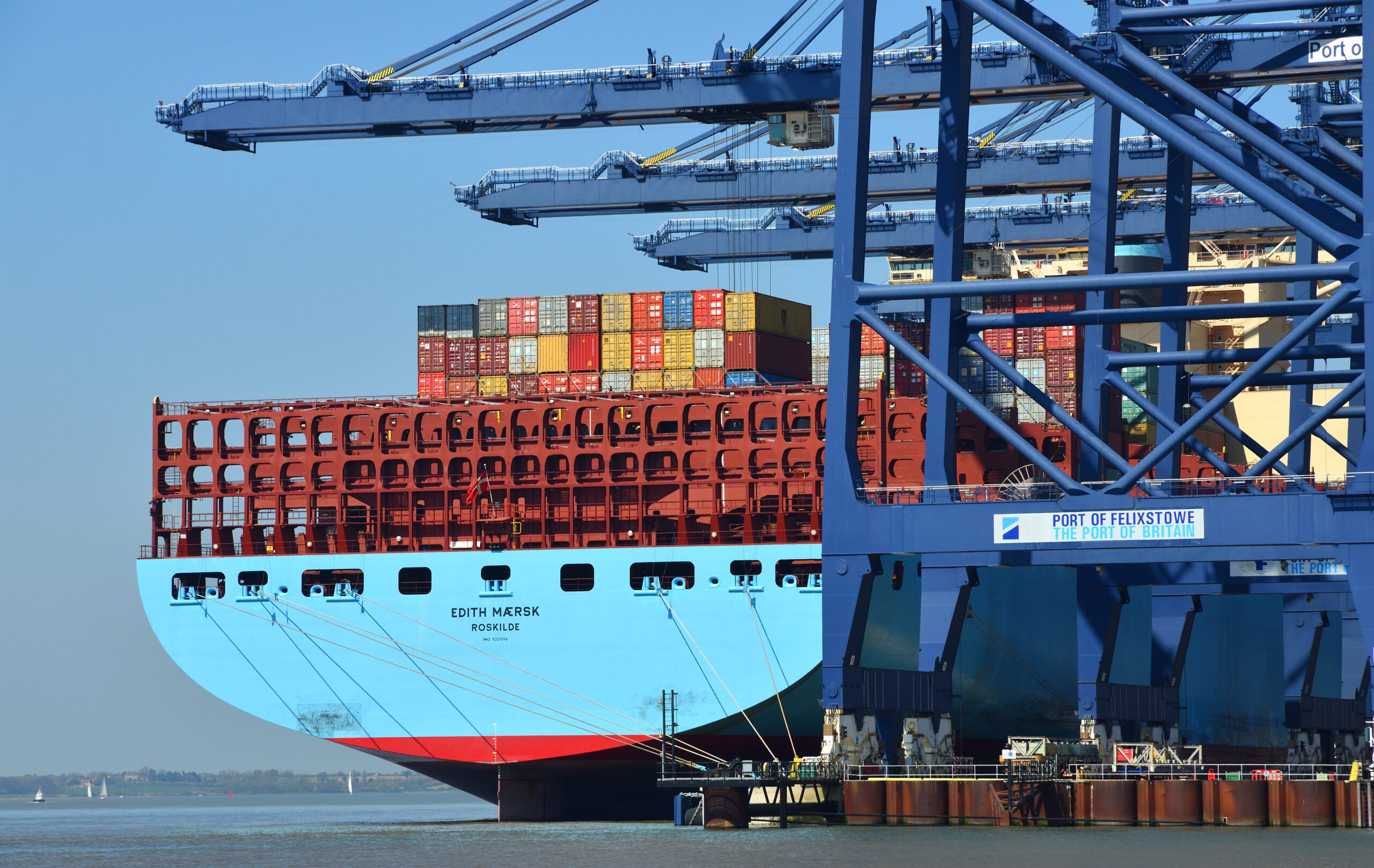


The transfer of green ammonia to the CMB.TECH-owned, Fortescue-chartered Mineral Europa at Port Hedland marks a significant step towards establishing an ammonia-fuelled shipping corridor between Western Australia and Asia.
Australia has completed its first bunkering of green ammonia to an ammonia-powered vessel, with the 93,000 dwt dry bulk carrier Mineral Europa receiving fuel at the port of Port Hedland on 2 November.
The 300-metre vessel, owned by CMB.TECH and on charter to Fortescue, is described as the world’s first ammonia-powered dry bulk carrier, received certified green ammonia from a bunker vessel before entering port to load iron ore for delivery to customers in China.
The Port Hedland operation followed an earlier bunkering near Zhoushan port in eastern China on 13th October, where the Mineral Europa received 1,000 tonnes of certified green ammonia in a ship-to-ship (STS) transfer from the bunkering vessel Sheng Hang Yong Le. The Mineral Europa then departed on its maiden voyage to Australia.
The two-hour Port Hedland ship-to-ship transfer operation brought together Pilbara Ports, Fortescue and CMB.TECH, with regulatory authorities and operational teams overseeing the transfer in a live port environment.
The transfer shows that ammonia bunkering can be undertaken at a major bulk export port, moving the fuel beyond vessel demonstrations and into the practical requirements of commercial shipping operations.
Building on earlier ammonia milestones
The Port Hedland operation builds on the first ship-to-ship ammonia transfer completed at the Port of Dampier in 2024. That earlier operation demonstrated the feasibility of transferring ammonia between two gas carriers, while the latest trial involved supplying an ammonia-powered bulk carrier ahead of a commercial voyage carrying iron ore.
Extensive safety preparation preceded the transfer, including hazard and risk assessments, ship compatibility studies, ammonia dispersion modelling, emergency response planning and vessel vetting. Additional marine support, vessel traffic management measures and operating limits covering weather and sea conditions were also incorporated.
Pilbara Ports said the trial would provide operational insights to inform future ammonia bunkering activity and the development of its proposed Pilbara Clean Fuel Bunkering Hub.
For Fortescue, the operation is another step in a programme to establish green ammonia as a marine fuel. Its Green Pioneer has been used to demonstrate ammonia propulsion internationally, while Mineral Europa brings that work into the company’s core iron ore shipping operations. Fortescue also charters nine other CMB.TECH vessels that could be converted to operate on ammonia in the future.
Connecting fuel production with shipping demand
The trial comes as Australia seeks to develop a wider ammonia production and supply chain for maritime and energy markets in the Asia-Pacific region.
As reported recently, NH3 Clean Energy‘s proposed WAH2 project is targeting first-phase production of 650,000 tonnes of blue ammonia annually in Western Australia, with a final investment decision targeted for the end of 2026 and production expected towards the end of 2029. The project is also targeting ammonia bunkering at Port Hedland and Dampier from 2030, potentially supplying vessels operating along the Pilbara–Asia Iron Corridor.
There is an important difference between the two developments in that the Port Hedland trial used certified green ammonia produced using renewable energy, whereas WAH2’s initial production is planned as blue ammonia, derived from natural gas combined with carbon capture and sequestration to reduce its carbon footprint. Both could contribute to the development of an ammonia supply network, although their lifecycle emissions profiles will differ.
The Australian developments also form part of a broader regional shift towards ammonia as a potential marine fuel. In Japan, a seven-company consortium is working to establish an integrated supply chain involving green ammonia procurement, terminal infrastructure, a dedicated ship-to-ship bunkering vessel and four ammonia-fuelled car carriers, with operations targeted for 2030. That initiative is intended to support shipping services across the Asia-Pacific, including trans-Pacific voyages.
Together, these projects illustrate the different elements needed to make ammonia propulsion commercially viable: fuel production, storage and handling infrastructure, bunkering vessels, suitable ships and dependable demand from operators.
From demonstration to commercial scale
For Pilbara, the challenge is to translate the successful trial into a dependable bunkering capability that can support regular vessel operations. Fortescue’s ambition is to supply its vessels with ammonia produced in Australia using renewable energy, but achieving this will require investment across the production, distribution and bunkering chain.
Commenting, Fortescue CEO, Dino Otranto, said the trial demonstrated that green ammonia bunkering was no longer a future concept, while emphasising the need for policy certainty and long-term offtake commitments to unlock investment in production and supply infrastructure.
Pilbara Ports CEO Samuel McSkimming said “The Pilbara has the scale, location and capability to play a leading role in the future of clean fuel bunkering. The insights gained from this trial will help guide the next phase of development and further position Western Australia and the Pilbara at the forefront of maritime decarbonisation.”
Alexander Saverys, Chief Executive Officer, CMB.TECH, said, “Today marks another defining moment for CMB.TECH, Fortescue, and Pilbara Ports. We are proving that decarbonising shipping is no longer a distant ambition. It is happening today. Mineral Europa is the first vessel of its kind, but many more will follow in the months and years ahead.”
The successful transfer is a significant operational milestone, but it does not in itself resolve the commercial challenges facing ammonia as a marine fuel. Fuel cost, availability, lifecycle emissions, vessel economics and the development of consistent safety and regulatory frameworks will all influence adoption.
Nevertheless, with an ammonia-powered bulk carrier now bunkered at Port Hedland and further production and infrastructure projects under development in Australia and Asia, the prospect of an ammonia-fuelled shipping corridor between the Pilbara and its Asian customers is becoming more tangible.