

A life cycle assessment (LCA) conducted by the Global Centre for Maritime Decarbonisation has found that onboard carbon capture can cut life cycle emissions by nearly 8 per cent, but current international accounting rules fail to reflect these benefits. The findings sharpen a growing debate at the IMO over how captured carbon should be treated when it is used to displace emissions elsewhere in the industrial economy.
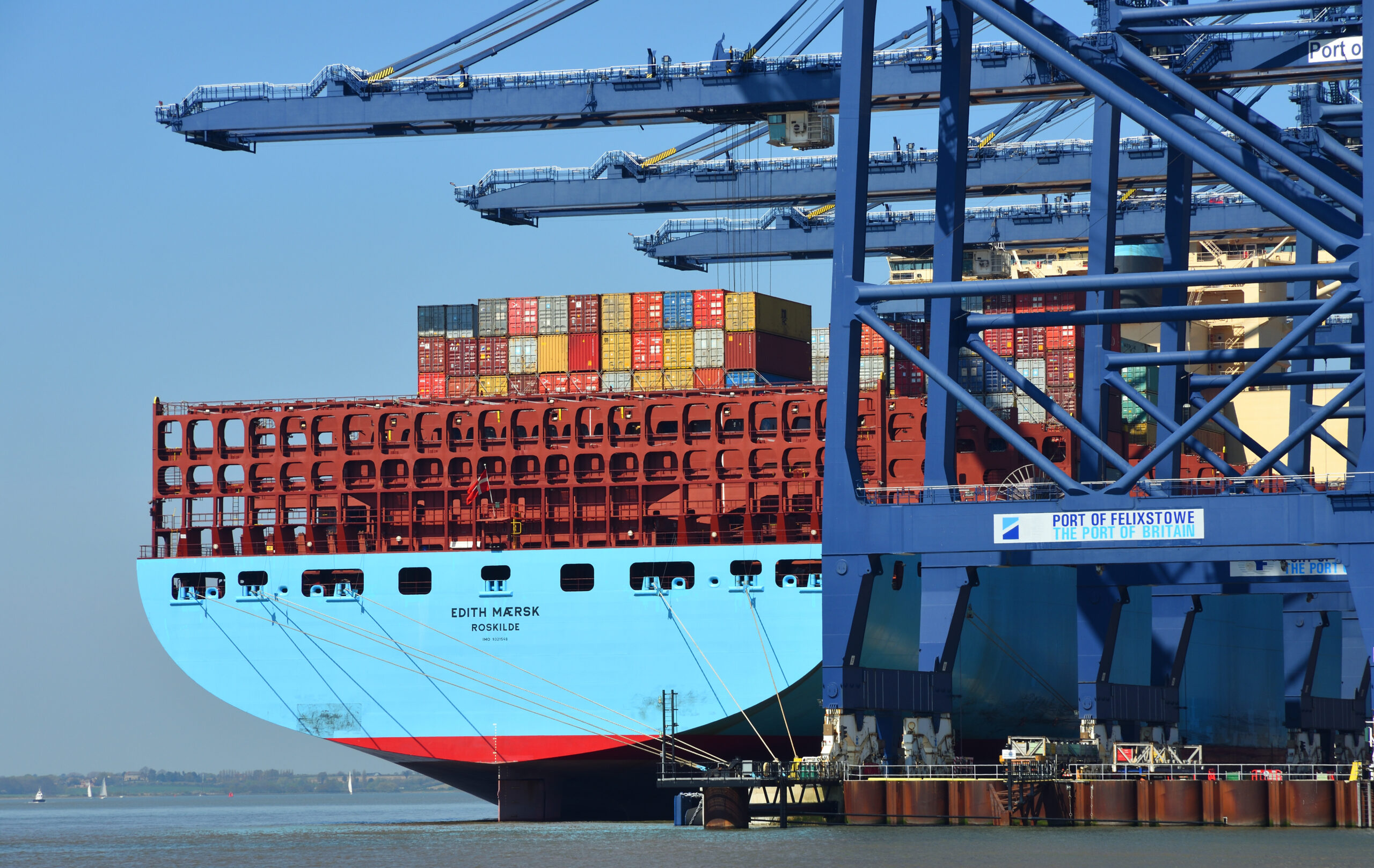
GCMD’s Project CAPTURED, completed in mid-2025, tracked carbon dioxide captured from the exhaust of a container vessel, liquefied onboard, transferred ship to ship, and then transported for industrial use. The centre’s latest analysis, verified by DNV, quantifies greenhouse gas impacts across the entire carbon value chain, from capture at sea to final utilisation on land, including ship-to-ship offloading and downstream use.
The findings hinge on a distinction with significant commercial implications. Using a consequential life cycle assessment, which accounts for emissions avoided when captured CO2 displaces carbon-intensive materials, the pilot achieved net emissions savings of 7.9 per cent across the value chain. This equates to 0.84 tonnes of CO2 avoided for every tonne captured and offloaded, with the system operating at a capture rate of 10.7 per cent.
Those savings were realised even though the pilot was burdened by what GCMD describes as first-of-a-kind inefficiencies. The absence of a waste heat recovery system increased the fuel penalty associated with running onboard carbon capture, while logistics emissions were inflated by CO2 venting during handling and by around 2,200 km of overland transport by truck. When these constraints are removed in a hypothetical optimised scenario, life cycle emissions savings rise to 17.8 per cent, close to two tonnes of CO2 avoided per tonne captured.
By contrast, applying the attributional life cycle approach recommended under current IMO guidelines produces a very different picture. From a shipowner’s perspective, with system boundaries ending at the point of CO2 utilisation and assuming permanent storage, the same value chain is assessed as increasing emissions by 8.6 per cent compared with a no-capture baseline. Avoided emissions from downstream product substitution are excluded entirely.
This methodological divergence helps explain the slow uptake of onboard carbon capture systems, despite growing interest from equipment suppliers and charterers. As GCMD puts it in its report, utilisation pathways can appear to deliver no emissions benefit under existing rules, offering little incentive to bear the capital and operating costs of installation.
The utilisation route tested under Project CAPTURED involved mineralising captured CO2 into precipitated calcium carbonate and post-carbonated slag. Both products displace materials typically produced through carbon-intensive processes, particularly limestone-based calcium carbonate used in construction. According to the assessment, this mineralisation pathway delivers greater overall climate benefit than permanent storage, once avoided emissions from displaced materials are included.
The centre also modelled higher capture rates to explore longer-term potential. At a 40 per cent capture rate, utilisation delivers life cycle emissions savings of 34 per cent, compared with 21 per cent for offshore permanent storage. Under more optimised value chains, savings from utilisation could be substantially higher again.
For GCMD, the results reinforce the view that onboard carbon capture has a role as a mid-term measure for vessels that will continue to burn conventional fuels for some years. Professor Lynn Loo, GCMD’s CEO, said: ‘Project CAPTURED shows that onboard carbon capture, when thoughtfully integrated with utilisation pathways, can deliver real emissions reductions today while we continue to scale up low- and zero-carbon fuels.’
She added: ‘It also highlights how we measure and account for those reductions matter. If our frameworks continue to ignore avoided emissions and displaced carbon, we risk disincentivising investments in solutions that can meaningfully bend the emissions curve.’