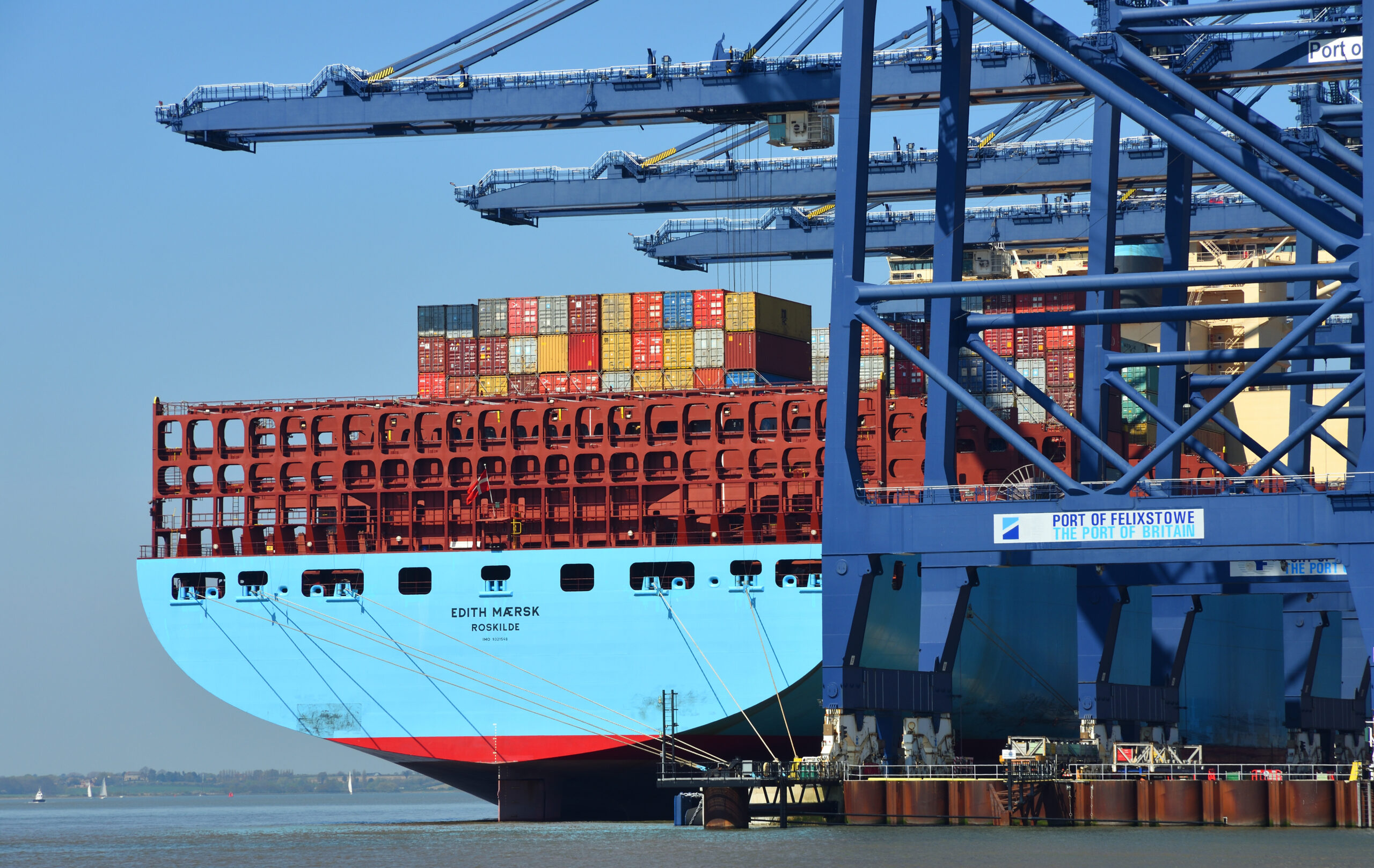


A new report from the Lloyd’s Register Maritime Decarbonisation Hub has found that early investment in a limited number of strategically positioned ports and export hubs could accelerate the availability and uptake of sustainable marine fuels.
The report, Building the sustainable maritime fuel supply chain, finds that the first phase of the shipping industry’s fuel transition is likely to depend less on technical development and more on coordinated infrastructure investment, financing structures and trade-route development.
The study identifies a growing disconnect between where low-carbon fuel production projects are being developed and where marine fuel demand is concentrated today. While the global bunkering market remains heavily centred on a relatively small number of established ports, many proposed e-fuel and sustainable biofuel projects are emerging in regions with lower existing shipping demand.
According to the report, 19 ports currently account for around half of global marine fuel supply. Lloyd’s Register said this concentration presents an opportunity for targeted infrastructure deployment, enabling a small number of major hubs to support the early adoption of multiple alternative fuels.
However, the analysis suggests future fuel supply chains may increasingly rely on new export corridors linking production-led regions with established shipping centres. Parts of the Americas, Africa and Asia are expected to develop as export-oriented fuel suppliers, while major Asian bunkering hubs are projected to remain dependent on imports. Europe is expected to adopt a mixed model, combining domestic production with imported supply.
The report also indicates that project developers are prioritising co-location with existing industrial infrastructure over greenfield development. More than 60% of identified e-fuel projects are located alongside existing refineries, petrochemical facilities or energy clusters, allowing developers to utilise established storage, utilities and logistics infrastructure while reducing permitting and execution risks.
Lloyd’s Register said this trend reflects efforts to reduce project delivery risk and accelerate project development.
Dr Carlo Raucci, director of sustainable fuels and strategy at the LR Decarbonisation Hub, said: ‘This transition is about more than new fuels, it’s about building a resilient maritime energy system. As supply chains diversify and new trade routes emerge, ports will become the critical interface between production and global shipping demand. Our analysis helps identify the priority locations where investment and partnerships can accelerate early market formation.’
The report concludes that the principal constraints on scaling alternative fuels are now commercial and institutional rather than technical. It highlights the need for coordinated investment across fuel production, port infrastructure, bunkering capability and vessel demand, supported by blended finance and risk-sharing mechanisms.
Vassia Sourtzi, fuel transition lead at the LR Decarbonisation Hub, said: ‘The biggest barrier to scaling alternative fuels is no longer identifying projects, it is enabling the full supply chain.’
LR report identifies infrastructure gap in maritime fuel transition
Dr Carlo Raucci, Director, Sustainable Fuels and Strategy, LR Decarbonisation Hub. Image: LR