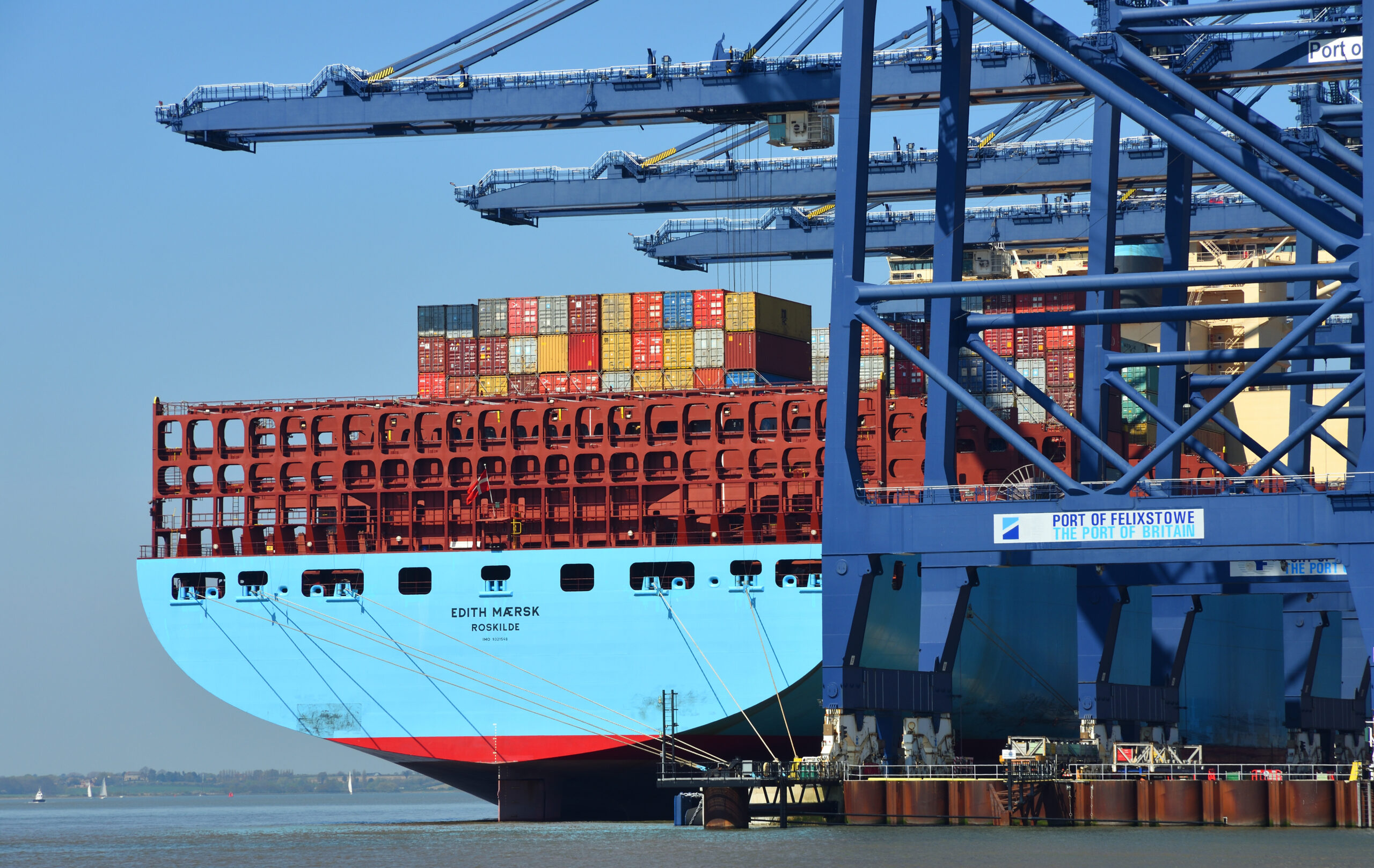


Rotterdam Shore Power (RSP) has selected ABB to engineer and construct a network of shore power installations with a combined capacity exceeding 100 megavolt-amperes. Once operational, the system will supply electricity to three of the port’s main deep-sea container terminals, APM Terminals Maasvlakte II and Hutchison Ports’ ECT Delta and ECT Euromax facilities.
The scale, measured by total installed capacity, is unprecedented. The installations will provide 35 connection points and allow up to 32 container ships to draw power simultaneously while alongside. ABB expects operations to begin in the second half of 2028, giving terminal operators and shipping lines a narrow window to prepare vessels and on-board systems ahead of regulatory deadlines.
From 1 January 2030, the EU’s FuelEU Maritime Regulation will require container and passenger ships above 5,000 gross tonnes to use onshore power supply, or an equivalent zero-emission technology, when at berth in EU ports. Rotterdam’s project therefore offers a glimpse of how major hubs are responding, not only by complying with the rules but by building infrastructure at a scale intended to accommodate future growth.
According to calculations by Rotterdam Shore Power, if vessels use shore power for at least 90 per cent of their time at berth, annual carbon dioxide emissions at the three terminals could fall by around 96,000 tonnes a year from 2030. The shift would also cut noise and local air pollution, an increasingly sensitive issue for ports operating close to urban centres.
‘We are excited to work together with ABB on this breakthrough project for RSP,’ said Ina Barge and Tiemo Arkesteijn, co-chief executives of RSP. ‘Based on deep knowledge and a proven track record, we can help make shore power available to all vessels calling at the APMT and ECT terminals at the Port of Rotterdam, reducing carbon dioxide emissions substantially as a result. Rotterdam is a frontrunner in electrification at this scale.’
For ABB, the contracts reinforce its push into marine electrification and port infrastructure. The group will be responsible for the full scope of delivery, from design and installation to commissioning, on-site testing and long-term service agreements at each terminal. Its package also includes a supervisory control and data acquisition system to monitor operations and track energy use for billing, underscoring that shore power presents commercial and data challenges alongside technical ones.
Rune Braastad, president of ABB’s Marine & Ports division, said: ‘This large-scale, multi-installation project for Rotterdam Shore Power demonstrates ABB’s expertise in delivering shore power from concept to connection. Our efficient, proven end-to-end solutions cover everything from design and commissioning to maintenance and support, while minimising disruption to operations during the installation phase. We are proud to contribute to the Port of Rotterdam’s decarbonisation journey in what represents a significant step towards realising the EU’s ambition for emission-free ports.’
Shore power reduces fuel consumption and emissions at berth, but it also increases demand for clean electricity and places ports at the centre of energy system integration. ABB says the infrastructure has been designed to be scalable and compatible with renewable energy sources, an important consideration as ports seek to align electrification with broader decarbonisation strategies, including hydrogen production, synthetic fuels and carbon capture.