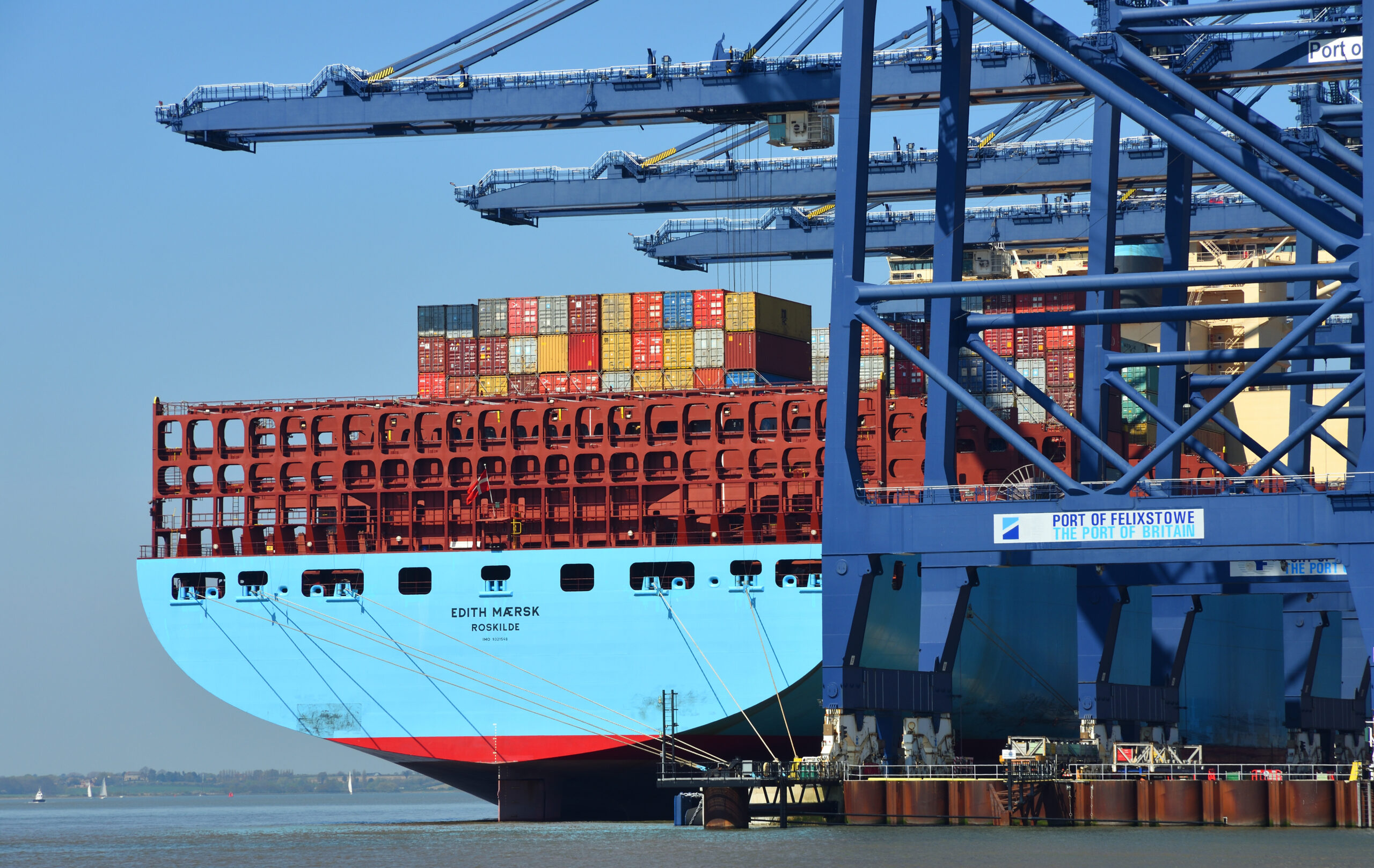


The Zero Emission Maritime Buyers Alliance (ZEMBA) has selected Hapag-Lloyd and North Sea Container Line to supply transport services using e-methanol and e-ammonia respectively.
Based on commitments to date, the contracts are expected to cover around 20bn tonne nautical miles of container transport over an initial three-year period, with some participants extending to five years. On current commitments, ZEMBA estimates that the deployments will abate at least around 120,000 metric tonnes of greenhouse gas emissions on a lifecycle basis.
ZEMBA aggregates demand from more than 45 cargo owners, including Amazon, IKEA and Nike, allowing carriers to underwrite early fuel supply that would be difficult to justify through bilateral contracts alone. The alliance argues that this demand pooling is essential to move e-fuels from demonstration to repeatable commercial deployment.
Hapag-Lloyd, which also won ZEMBA’s inaugural 2024 tender for biomethane, will deploy e-methanol on large dual-fuel containerships on a trans-oceanic trade lane. The fuel will be produced from renewable electricity-based hydrogen and is expected to deliver lifecycle carbon intensity reductions of at least 90 per cent compared with conventional marine fuels.
Rolf Habben Jansen, CEO of Hapag-Lloyd, said: ‘At a time when sourcing scalable e-fuels remains a major challenge for the entire industry, winning the second ZEMBA tender is a significant milestone for us. Deploying e-methanol is an essential step in our journey to reach net-zero fleet operations by 2045.’
Alongside this, North Sea Container Line will introduce what ZEMBA describes as the world’s first e-ammonia-powered containership, operating on a northern European trade. While smaller in absolute scale than the Hapag-Lloyd deployment, the project is strategically significant in broadening the range of hydrogen-derived fuels being commercialised in parallel.
ZEMBA’s leadership has framed the outcome as an exercise in market building rather than short-term compliance. Ingrid Irigoyen, ZEMBA’s president and CEO, said the tender demonstrated that voluntary private sector demand could accelerate fuel pathways with long-term relevance. ‘This voluntary private sector initiative remains on track to invest in rapid on-the-water deployment of vastly scalable, next-generation maritime fuels.’
A further feature closely watched by policymakers and financiers is the use of book and claim accounting to bridge geographic mismatches between fuel supply and cargo demand. ZEMBA continues to work with Katalist, a non-profit maritime book and claim system hosted by the Mærsk Mc-Kinney Møller Center for Zero Carbon Shipping and RMI. The aim is to ensure third-party verified emissions claims while enabling early projects to proceed despite limited bunkering availability.