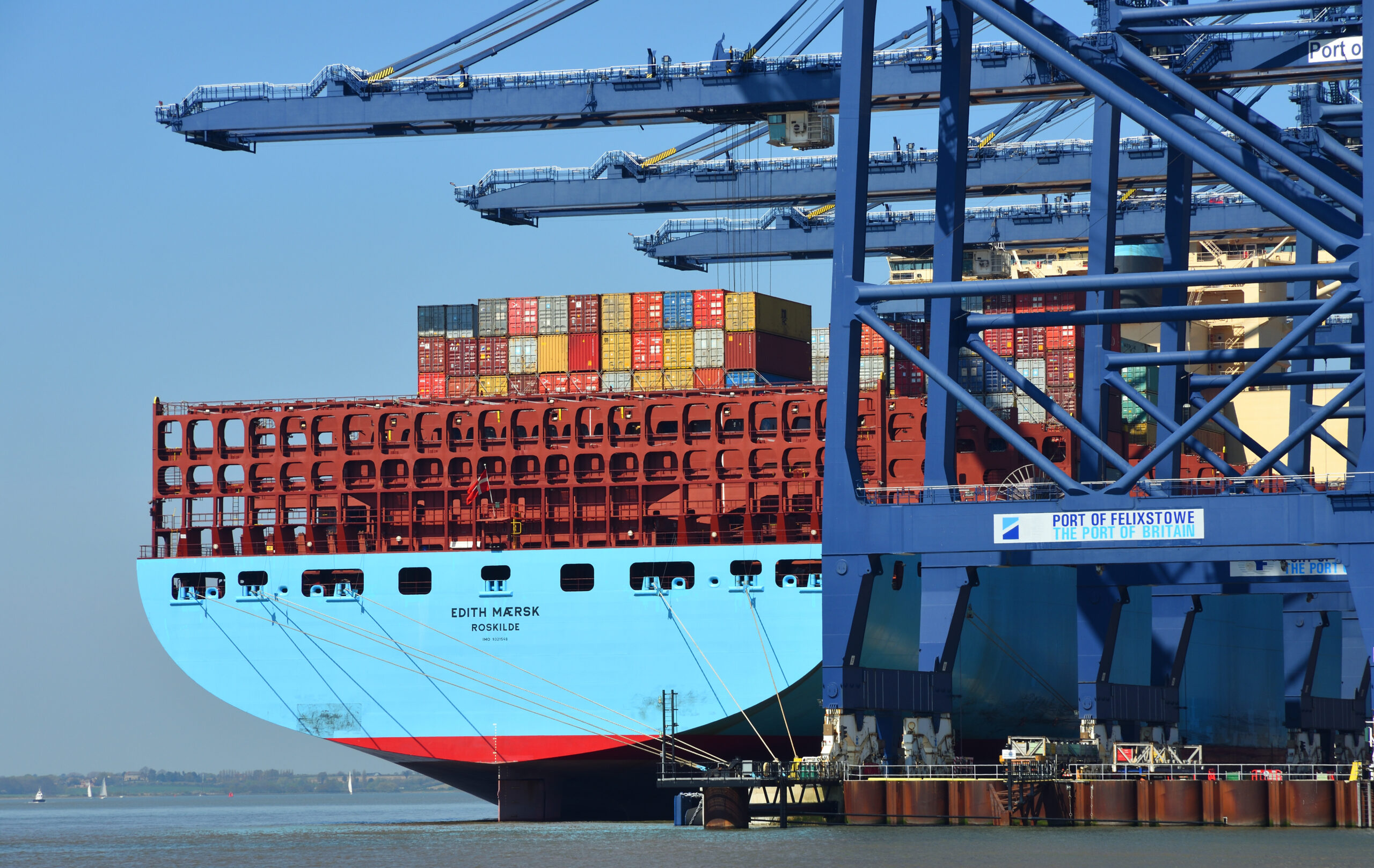


The American Bureau of Shipping (ABS) and South Korean shipbuilding group HD Hyundai have launched a joint development project to examine the feasibility of nuclear-powered electric propulsion for large container vessels.
The initiative brings together ABS with HD Korea Shipbuilding & Offshore Engineering (HD KSOE) and HD Hyundai Samho Heavy Industries (HD HSHI). The partners will develop a conceptual design for a 16,000 TEU container ship equipped with a nuclear-linked electric propulsion system.
Under the agreement, HD KSOE and HD HSHI will undertake the core engineering work, including the basic propulsion design, electrical component specifications and the layout of the ship’s power systems.
One configuration under consideration involves the use of small modular reactors (SMRs) as the vessel’s primary energy source. These compact reactors can generate around 100 MW of power, roughly equivalent to about 134,000 horsepower, which could meet the substantial energy requirements of a large container ship operating on long-distance trade routes.
Matthew Mueller, ABS Vice President, North Pacific Business Development, said: ‘This project represents an important step in exploring the potential of a nuclear-powered electric propulsion system for container vessels. By combining HD Hyundai’s shipbuilding expertise with ABS’ deep engineering experience in maritime safety, we aim to evaluate technologies that can support safer, more efficient and lower-emission operations for the next generation of propulsion solutions.’
The concept design includes several technical features being evaluated for the vessel. These include a twin-screw propulsion configuration to enhance manoeuvrability and thrust, along with direct-drive electric motors connected to the propellers in order to minimise energy losses during transmission.
Engineers are also examining how a stable onboard power supply could support additional electrical loads. Large container ships require substantial electrical capacity to operate onboard systems, including refrigerated cargo units. A high and consistent energy output from nuclear generation could allow vessels to carry a larger number of these power-intensive containers.
Any nuclear-powered commercial ship would need to comply with international maritime regulations and nuclear safety standards. The project will evaluate how such vessels could maintain safe operations during scenarios such as collisions or flooding, while complying with regulatory frameworks set by the International Maritime Organization and nuclear safety guidelines issued by the International Atomic Energy Agency.